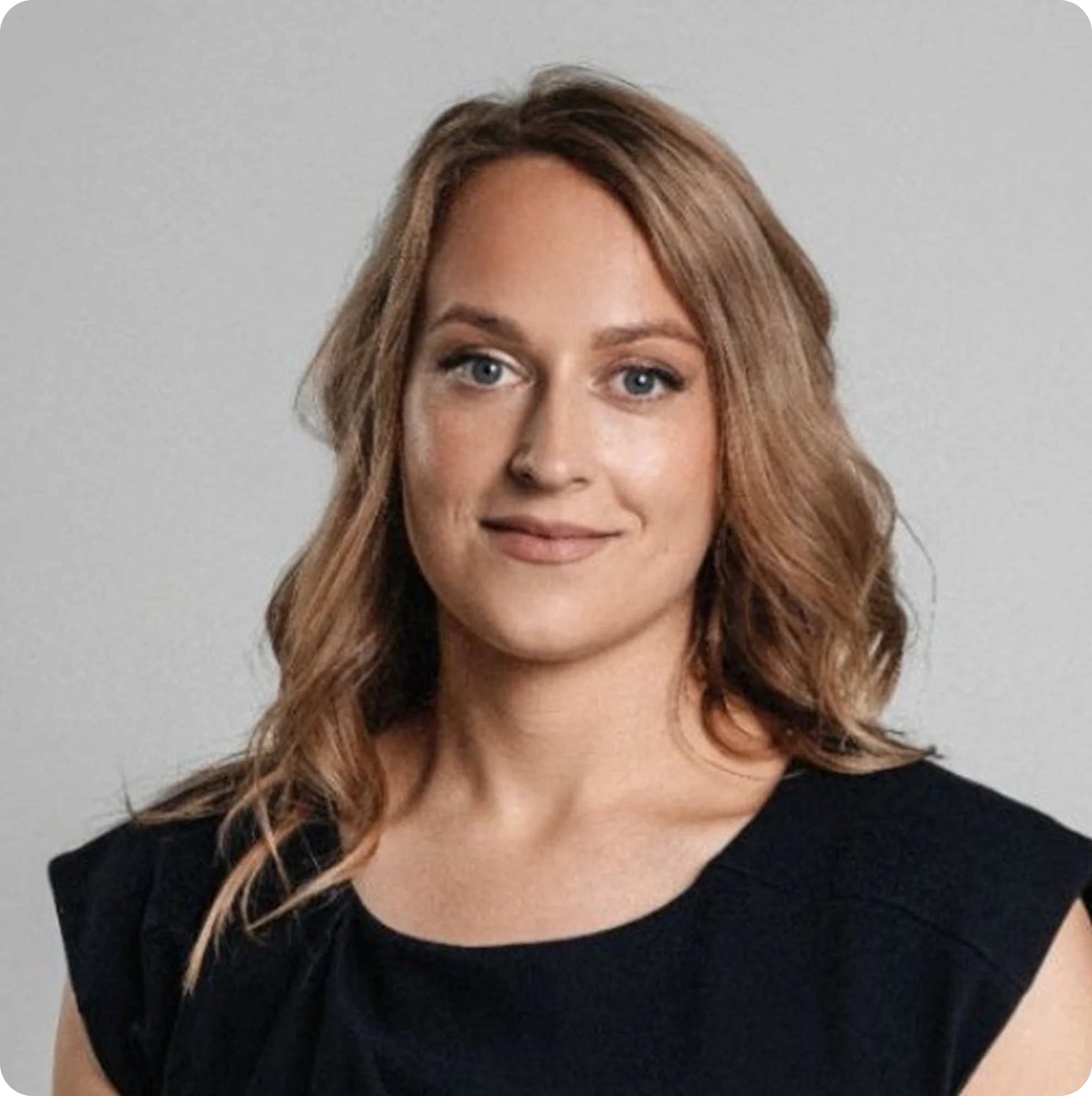
Sonata Kvedaraviciute
Software engineer
- I am a humble, curious, and grounded PhD graduate in Computational Chemistry with a deep appreciation for the role of education in shaping both individuals and society. My research has focused on developing computational tools to study complex molecular systems, and I have experience as a teacher, which has reinforced my belief in the power of mentorship.
I am passionate about guiding students through scientific discovery, encouraging critical thinking, and helping them grow both technically and personally. With a strong foundation in computational science and a collaborative mindset, I strive to create a supportive and intellectually stimulating environment for learning and growth.
- Universities attended -
- DTU - Technical University of Denmark DTU - Technical University of Denmark Doctor of Philosophy - PhD, Theoretical Chemistry
- Universidad Autónoma de Madrid Universidad Autónoma de Madrid Master of Science - MS, Theoretical Chemistry and Computational modeling
- Vilniaus universitetas / Vilnius University Vilniaus universitetas / Vilnius University Bachelor's degree, Secondary Education and Teaching
- Vilniaus universitetas / Vilnius University Vilniaus universitetas / Vilnius University Bachelor of Science (B.Sc.), Nanomaterials chemistry
- Preferred format of mentorship - 1-on-1 mentoring, Small group research (2–3 students), Flexible / I’m open to different formats
- Time zone - GMT+3
- Your general weekly avability for sessions - Currently Weekdays after 6pm GMT+3, I can also assign 4 hours during the weekend.
- Any additional information you’d like to share with us? -
- Currently I am full time employed, but I am considering transitioning to this role, depending on the offer, work conditions and how the work is organized.
- Brief Summary of Your Research Interests.
- My research interests lie at the intersection of computational chemistry, scientific software development, and multiscale modeling, algorithm development and application to real-world problems. I focus on developing interoperable, high-performance computational tools—particularly using Fortran and Python.
- Please describe your past experience mentoring or teaching students.
- I was working as a chemistry teacher for 3 months, for high school students (14-18 y.o.), organizing trips and other activities, also during my PhD I was working as a teaching assistant in Physical and Analytical chemistry course, where I helped students to prepare reports and was evaluating their work.
- List 3–5 example project ideas students could pursue with your guidance.
- Investigate structural parameters of different liquids using MD simulations
- Optimize geometry of drug-like molecules
- Compute simple molecule fingerprints using computational spectroscopy
- Investigate the stability of drug-like molecules in different solvents
- Investigate the stability/decay of commonly used pesticids/insecticids
- What types of final deliverables can your students expect to produce?
- Research paper
- Data analysis report
- Codebase or technical prototype
- Podcast or video
- Presentation or oral defense
- Any additional project themes, trending ideas, or real-world challenges you’d love to explore with motivated high school students?
- I want to apply the computational modelling knowledge to advance the agriculture sector - agro tech. Precision agriculture is my current interest.
- 🗣️ Communication & Presentation
- Academic writing (papers, reports)
- Public speaking / oral presentations
- Creating research posters or infographics
- 🔍 Research & Inquiry Skills
- Formulating research questions
- Conducting literature reviews
- Identifying credible sources
- Understanding academic research structures (papers, abstracts, citations)
- Synthesizing information from multiple sources
- 🧠 Critical Thinking & Analysis
- Analyzing arguments and data
- Identifying biases and limitations
- Drawing logical conclusions
- 📊 Quantitative & Qualitative Methods
- Designing experiments or surveys
- Data visualization
- Coding for data analysis (Python, R, etc.)
- 🎨 Creativity & Problem-Solving
- Brainstorming innovative solutions
- Connecting interdisciplinary ideas
- Applying knowledge to real-world challenges
- 📅 Project Management & Organization
- Setting research goals and timelines
- Managing independent work
- Documenting progress
- Revising based on feedback
- 🤝 Collaboration & Mentorship
- Working in small research teams
- Engaging in intellectual discussions
- Receiving and applying constructive feedback
- Building research confidence and autonomy