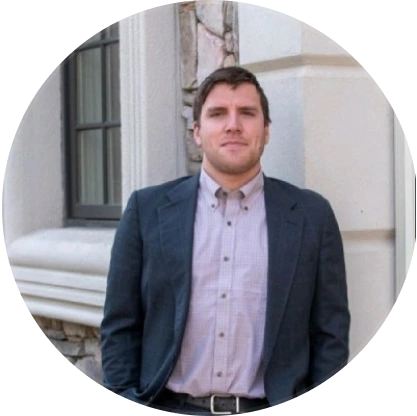
Miles DeAngelis
Assistant Director of
Discovery Biology
- I received my Bachelor of Science degree in Molecular Genetics with a minor in Anthropology from the State University of New York at Fredonia. During my time at Fredonia, I worked in a microbial ecology research lab, studying the impact of biofilms on iron deposition in local waterways. Upon graduation,
I joined the Biology PhD program at Wesleyan University, where I studied organ development and patterning using the fruit fly (Drosophila) pupal retina as a post-mitotic model. After defending my thesis, I worked in the biopharmaceutical industry, deploying machine learning to identify therapeutic targets for drug design. I have identified hundreds of candidate drug targets across therapeutic areas and disease types.
- Universities attended -
- Wesleyan University- Doctor of Philosophy - PhD, Biology
- State University of New York at Fredonia - Bachelor of Science - BS, Molecular Genetics
- Preferred format of mentorship - 1-on-1 mentoring, Small group research (2–3 students), Short-term Pods (4–6 sessions), Flexible / I’m open to different formats
- Time zone - Eastern Daylight Time
- Your general weekly avability for sessions - I am available most evenings/nights and occasionally on weekends with advanced notice. I can also make myself available for meetings early in the mornings if required.
- Any additional information you’d like to share with us? -
- I look forward to sharing my knowledge and experiences with you!
- Brief Summary of Your Research Interests.
- I am interested in exploring the cellular mechanisms that drive diseases, with the goal of identifying novel therapies. Sadly, there are many rare diseases for which treatment options are limited and disease-modifying therapies are non-existent. In addition, there are many patient segments for more common diseases that become refractory to available therapies over time. I believe that by exploring the cellular mechanisms that cause these diseases, we can personalize therapies for patient subgroups and improve quality and duration of life.
- Please describe your past experience mentoring or teaching students.
- I have extensive experience mentoring students. As an undergraduate, I worked as a tour guide in the admissions department, where I answered questions from prospective students and their parents about campus life and how best to apply their interests once they arrived on campus. I have also been a teaching assistant for introductory lecture and laboratory courses at Wesleyan, where I provided mentorship and guidance to incoming freshman biology majors. During my time in research labs as both an undergraduate and graduate student, I provided mentorship to students as they adjusted to the demands of working in a research laboratory. This included helping them design experiments, reviewing laboratory safety protocols, and interpreting their experimental results.
- List 3–5 example project ideas students could pursue with your guidance.
- Identifying a novel therapeutic target to treat a disease of interest.
- A literature review of a gene or disease of interest.
- Designing experiments to identify new antimicrobial compounds.
- Prioritizing new indications that can be treated with an approved drug.
- What types of final deliverables can your students expect to produce?
- Research paper
- Literature review
- Data analysis report
- Presentation or oral defense
- Any additional project themes, trending ideas, or real-world challenges you’d love to explore with motivated high school students?
- I would be happy to explore the de-extinction work being done, most recently with dire wolves, as well as the emerging role of AI.
- 🗣️ Communication & Presentation
- Academic writing (papers, reports)
- Public speaking / oral presentations
- Creating research posters or infographics
- Storytelling through data
- 🔍 Research & Inquiry Skills
- Formulating research questions
- Conducting literature reviews
- Identifying credible sources
- Understanding academic research structures (papers, abstracts, citations)
- Synthesizing information from multiple sources
- 🧠 Critical Thinking & Analysis
- Analyzing arguments and data
- Identifying biases and limitations
- Drawing logical conclusions
- Evaluating conflicting evidence
- 📊 Quantitative & Qualitative Methods
- Statistical analysis
- Data visualization
- 🎨 Creativity & Problem-Solving
- Brainstorming innovative solutions
- Connecting interdisciplinary ideas
- Applying knowledge to real-world challenges
- 📅 Project Management & Organization
- Setting research goals and timelines
- Managing independent work
- Documenting progress
- Revising based on feedback
- 🤝 Collaboration & Mentorship
- Working in small research teams
- Engaging in intellectual discussions
- Receiving and applying constructive feedback
- Building research confidence and autonomy