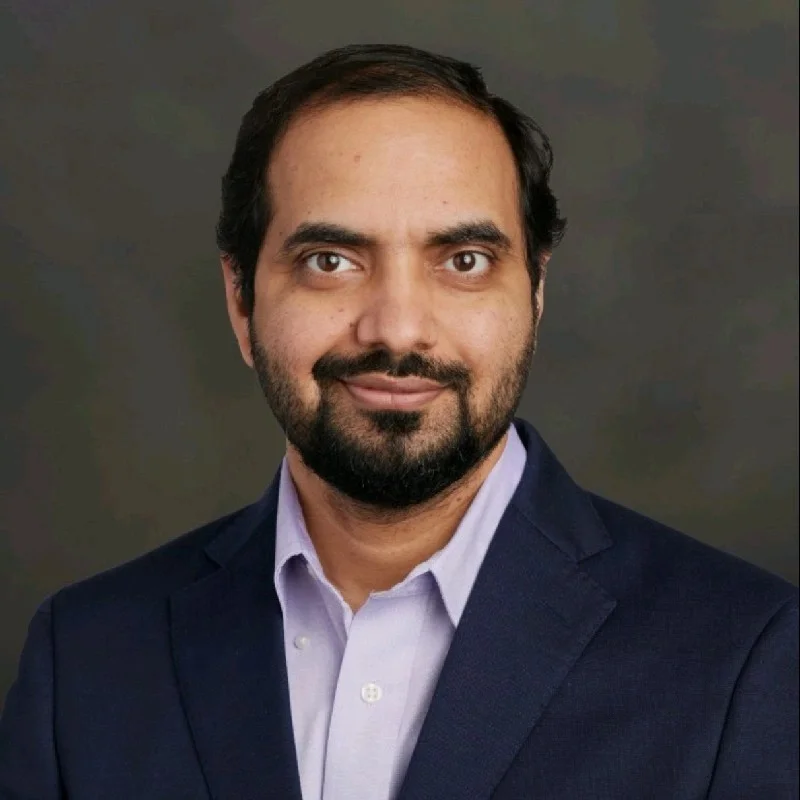
Varun Kumar
Assistant Professor
- My name is Varun Kumar, and I am a Biomedical scientist, working as an Assistant Professor at the Icahn School of Medicine at Mount Sinai. I have more than 10 years of experience working in neuroscience and ophthalmology research. I completed my PhD in Neuroscience at Kent State University, Ohio, USA, and undertook two postdoctoral training programs, one at Stanford University and another at Harvard University. My lab research involves understanding the role of intracellular stress response and their crosstalk in ocular and neurological diseases.
I’ve worked extensively with high school, undergraduate, and doctoral students—helping them explore interdisciplinary topics, develop research skills, and build confidence as independent thinkers. I’m excited to share my experience to support the next generation of curious, driven learners.
- Universities attended -
- Stanford University Stanford University Postdoctoral Research Scholar, Ophthalmology
- Kent State University Kent State University Doctor of Philosophy (PhD), Neuroscience
- Devi Ahilya Vishwavidyalaya Devi Ahilya Vishwavidyalaya Master's degree, Biotechnology
- Hans Raj College Hans Raj College Bachelor's degree, 2005-2008
- University at Buffalo School of Management, The State University of New York Mini MBA , General
- Preferred format of mentorship - Small group research (2–3 students)
- Time zone - USA (eastern time zone)
- Any additional information you’d like to share with us? -
- Currently residing in the Savannah, US. Might change my location in few months but will keep you informed about anything in advance.
- Brief Summary of Your Research Interests.
- We are an interdisciplinary group in Ophthalmology and Pharmacological Sciences at Icahn School of Medicine at Mount Sinai, New York. Our mission is to understand the contribution of the intracellular stress response, specifically Endoplasmic reticulum (ER) and mitochondrial stress and their crosstalk dysregulated in many neurological and ocular diseases. Our research model is corneal endothelium cells that undergo various intracellular stress, ultimately leading to apoptosis in Fuchs Endothelium Corneal Dystrophy (FECD). We use cutting-edge cellular and molecular biological techniques, genetics and pharmacological tools, single-cell genomics, RNA seq, large datasets, etc.
- Please describe your past experience mentoring or teaching students.
- In my lab, I mentor high school students medical students, undergraduates, PhD and postdoc students for performing high quality research. Please visit my research page. https://labs.icahn.mssm.edu/kumarlab/
- List 3–5 example project ideas students could pursue with your guidance.
- Role of mitochondria in mediating eye disease
- Role of Endoplasmic reticulum in mediated eye diseases
- Understanding the role of endoplasmic reticulum- mitochondria crosstalk in eye diseases
- What types of final deliverables can your students expect to produce?
- Research paper
- Literature review
- Data analysis report
- Presentation or oral defense
- Any additional project themes, trending ideas, or real-world challenges you’d love to explore with motivated high school students?
- Bridging the Digital Divide in Education: Exploring access to technology and internet as a barrier to learning in underserved communities—and designing potential solutions. Mental Health and Academic Pressure in High-Achieving Students: Investigating the social and psychological impacts of competitive academic environments and proposing interventions. Sustainable Innovation in Engineering and Design: Examining how engineers can create environmentally responsible solutions to global challenges like waste, energy, or water access. Bias in Algorithms and Tech Design: Analyzing how social biases can become embedded in AI systems and exploring ways to promote fairness and accountability. Culturally Responsive Curriculum Design: Researching how school curricula can be made more inclusive of diverse histories, perspectives, and learning styles.
- 🗣️ Communication & Presentation
- Academic writing (papers, reports)
- Public speaking / oral presentations
- Creating research posters or infographics
- Storytelling through data
- Making a compelling final product (website, video, podcast, app)
- 🔍 Research & Inquiry Skills
- Formulating research questions
- Conducting literature reviews
- Identifying credible sources
- Understanding academic research structures (papers, abstracts, citations)
- Synthesizing information from multiple sources
- 🧠 Critical Thinking & Analysis
- Analyzing arguments and data
- Identifying biases and limitations
- Drawing logical conclusions
- Evaluating conflicting evidence
- 📊 Quantitative & Qualitative Methods
- Designing experiments or surveys
- Statistical analysis
- Data visualization
- 🎨 Creativity & Problem-Solving
- Brainstorming innovative solutions
- Connecting interdisciplinary ideas
- Applying knowledge to real-world challenges
- 📅 Project Management & Organization
- Setting research goals and timelines
- Managing independent work
- Documenting progress
- Revising based on feedback
- 🤝 Collaboration & Mentorship
- Working in small research teams
- Engaging in intellectual discussions
- Receiving and applying constructive feedback
- Building research confidence and autonomy